
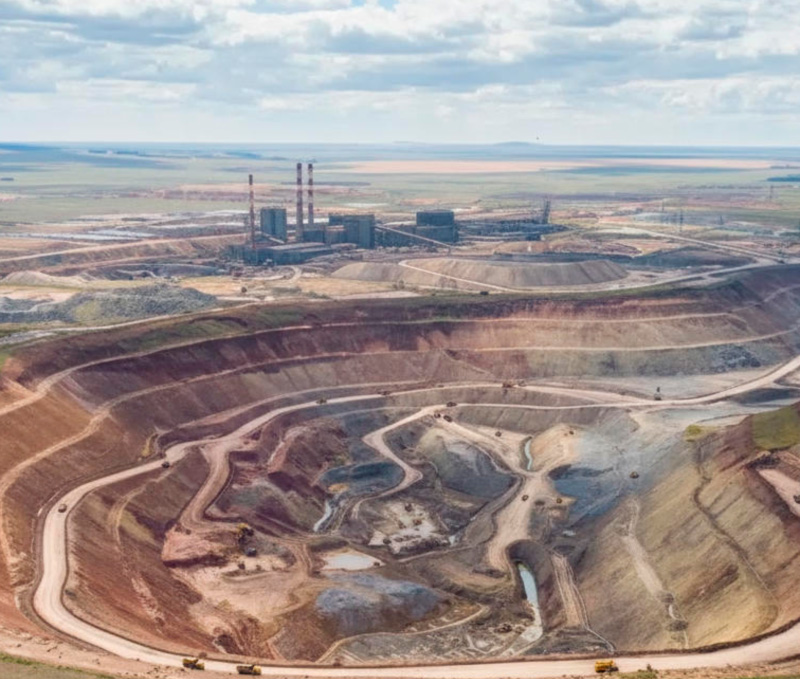
Reforming for Value in a Multi-Vector Reality
Kazakhstan: The Era of “Easy Mining” Ends as the Push for Value-Added Production Begins
The key takeaway from the industry trends is clear: Kazakhstan has committed to a decisive shift toward building a sophisticated manufacturing and production infrastructure. This strategy encompasses every segment of the value chain, from initial exploration to the manufacturing of high-end finished products.
The End of “Easy Money”
The period of “easy extraction” and “quick wins” in Kazakhstan’s extractive sector has concluded. The nation is moving from declarations to direct action, prioritising the full-scale realisation of its mineral resource potential through value creation.
A Shift in the Global Investment Landscape
While China currently plays the leading role in the region’s industrial development, Kazakhstan remains open to all global partners-including the United States, Canada, Australia, Japan, Korea, Europe, Turkey, and the Arab nations. However, entry into the market now requires a sophisticated approach:
- From Export to Integration: Success in Kazakhstan now demands investment not just in ore exports, but in domestic processing and production.
- Technological Transfer: Priority will be given to partners ready to implement advanced technologies and innovative industrial processes.
- Economic Impact: Investors are expected to contribute to the national economy through the creation of high-quality jobs and local expertise.
The Bottom Line
For international stakeholders, the message is unequivocal: the time for simple resource extraction has passed. Kazakhstan is seeking long-term strategic partners who are ready to invest in the country’s industrial future and create tangible economic value.
Those prepared to transition from words to action are invited to join the dialogue at the upcoming Forum.
For stakeholders at the MINEX Kazakhstan 2026 Forum, the operational paradigm has evolved from pure resource extraction. The main focus now is the strategic management of a comprehensive regulatory framework surrounding the mining business. Market leadership in the upcoming cycle will be defined by the alignment of corporate objectives with Kazakhstan’s national industrial strategy. This shift presents institutional investors with scalable opportunities to capitalise on the country’s transition from raw material exports to the development of high-value technological clusters within the Eurasian market.
Executive Summary:
The Inflection Point
The 16th MINEX Kazakhstan Forum (15-16 April 2026) convenes at a pivotal moment of market maturation. The sector’s trajectory is now underpinned by a stable constitutional foundation, a transparent and modernised fiscal code, and a clear geopolitical mandate to elevate critical mineral reserves into global technological supply chains. This alignment offers institutional capital a secure and structured pathway to participate in Kazakhstan’s industrial diversification and value creation.
The Republic of Kazakhstan is currently implementing a comprehensive modernisation of its extractive sector ecosystem, marking a pivotal advancement in the market's development since the immediate post-Soviet era.
The outlook for 2026 is not merely one of regulatory adjustment but of a fundamental “reset” in the social contract between the state, the subsoil user, and the citizenry, designed to align state objectives with investor returns and international ESG standards.
This report delivers a detailed assessment of the legislative, fiscal, and operational fundamentals that underpin the investment thesis for Kazakhstan’s mining industry in the current cycle.

The “New Era” of development, as articulated by the forum’s overarching themes, is characterised by a shift from volume-centric extraction to value-centric processing. This transition is underpinned by the implementation of the 2026 Tax Code and the enactment of a modernised Water Code dedicated to sustainable resource management.
Central to this strategy is the optimisation of state participation frameworks within strategic sectors, most notably in uranium mining and the development of rare and rare-earth metals.
Furthermore, the industry operates within a sophisticated multi-vector framework, where Kazakhstan is steadily reinforcing its position as a neutral and reliable strategic partner for the European Union, the United Kingdom, China, Russia, and the United States. In line with this, the Trans-Caspian International Transport Route (Middle Corridor) has transitioned from a strategic vision into an operational reality. Supported by significant capital investment, the corridor serves as a critical logistical artery, ensuring the diversification of supply chains and the uninterrupted export of strategic materials to global markets.
This report provides an analysis of these converging trends, offering a granular examination of the legislative, fiscal, and operational environments that define the Kazakhstan Mining Outlook for 2026.
1. The Macro-Strategic Context: MINEX Kazakhstan 2026 and the “Multi-Vector” Vision
The MINEX Kazakhstan 2026 Forum (Astana, 15–16 April) stands as the premier platform for strategic dialogue and capital allocation within the Central Asian mining sector. Under the theme “Kazakhstan’s Mineral Resources: Reforming for Value in a Multi-Vector Reality,” the event highlights the nation’s proactive approach to global economic integration, emphasising its role as a stable jurisdiction for maximising resource value and securing diverse international supply chains.
1.1 The Strategic Pivot: From Extraction to Midstream Competence
For decades, the prevailing narrative of Kazakhstan’s mining sector was one of immense raw potential—a “periodic table elements” superpower exporting ores and concentrates. The 2026 outlook definitively shifts this narrative toward midstream and downstream development. The government has signalled that access to mineral resources will henceforth be directly tied to investment in technology and processing capacity.
This pivot is not aspirational but legislative. The regulatory overhaul driven by the Ministry of Industry and Construction forces subsoil users to adopt Best Available Technologies (BAT) and commit to in-country value creation. The MINEX forum’s agenda highlights this through its focus on “Technological Advancement,” specifically addressing the challenge of processing lower-grade deposits which constitute a growing share of the remaining resource base.
Effective 1 January 2026, Kazakhstan’s new Tax Code has introduced a tenfold reduction in the Mineral Extraction Tax (MET) rate for solid minerals recovered from anthropogenic (man-made) mineral formations, such as tailings and waste rock dumps. This strategic fiscal measure is designed to incentivise the adoption of innovative processing technologies and the commercial reclamation of residual raw materials. Beyond economic growth, the policy aims to mitigate the deep-seated environmental legacies inherited from the Soviet era and the subsequent decades of mining activity, fostering a more sustainable and circular mining industry.
The “pressing question” dominating the 2026 discourse is whether the country can convert its reserves— particularly in tungsten and rare metals & lanthanides —into real market power by creating alternative supply chains “from mine to finished product”. This ambition challenges the historical dominance of off-take agreements that favoured the export of raw materials to processing hubs in neighbouring jurisdictions, primarily China and Russia.
1.2 “Policy Durability” in a Reforming State
A central tenet of the 2026 outlook is the concept of “Policy Durability.” Investors attending the MINEX forum are engaging in candid discussions regarding the long-term sustainability of the recent reforms. The tension lies between the state’s need to attract foreign direct investment (FDI) for complex, capital-intensive projects and the populist imperative to ensure that natural resource wealth works “first for the Kazakhstani people”.
This creates a complex operating environment where the rules of engagement are becoming more transparent but also more demanding. The era of “manual management”—where specific projects were pushed through via individual decrees or opaque agreements—is being replaced by systemic, albeit stricter, legislative frameworks. The forum’s sessions on “building foreign partnerships” and “strategic goals” reflect a desire to formalise these relationships within a predictable legal structure, moving away from the ad-hoc decision-making that previously characterised the sector.
1.3 The Geopolitical “Multi-Vector” Reality
The term “multi-vector” is critical to understanding the 2026 investment climate. Kazakhstan is actively diversifying its strategic partnerships to avoid over-reliance on any single geopolitical bloc.
United Kingdom
A strategic partnership roadmap focused on critical minerals and the circular economy is now in the implementation phase, encouraging British firms to invest in processing capabilities.
European Union
An MoU on sustainable raw materials aims to integrate Kazakhstan into the EU’s battery and renewable hydrogen value chains, positioning the country as a vital supplier for the European energy transition.
China
Continued deep integration in logistics and processing, exemplified by joint ventures in tungsten and uranium.
United States
Investment in rare earth exploration and processing technologies, driven by Western desires to diversify supply chains away from monopolistic competitors.
This multi-vector approach provides a layer of security for investors, as the state is incentivised to maintain a balanced playing field. However, it also introduces complexity, as mining companies must navigate sanctions compliance, export controls, and the competing strategic interests of these global powers.
2.The Constitutional and Legislative Architecture of 2026
The operational environment for 2026 is anchored by a wholesale reconstruction of the national legal architecture. Following proposals initiated in late 2025, Kazakhstan has moved toward a “human-centric” constitutional model that significantly alters the governance of natural resources and the legislative process itself.
2.1 The New Constitution and the Kurultai
The constitutional reforms, affecting approximately 84% of the basic law, have introduced a unicameral parliament, known as the Kurultai, comprising 145 deputies elected through a proportional system. This structural change is designed to streamline the adoption of laws and increase legislative accountability.
Key features of this reform include:
Legislative Initiative
The introduction of a “People’s Council” as a nationwide consultative body with the right of legislative initiative. This body introduces a formal mechanism for public sentiment to influence mining legislation, potentially increasing scrutiny on environmental and social impacts.
Human Rights Priority
The constitution now explicitly declares human rights and freedoms as the highest priority of the state. For the mining sector, this implies a more robust legal framework for labour rights, community consultation, and health and safety standards.
Presidential Oversight
While the parliament is strengthened, the President retains the right to determine the priority of draft laws, ensuring that urgent economic reforms—such as those related to the subsoil code—can be fast-tracked.
2.2 The “Rule of Law” and Investment Security
The constitutional overhaul aims to address one of the most persistent complaints from foreign investors: the lack of a predictable rule of law. By strengthening the independence of the judiciary and the legal profession, the state aims to provide a neutral forum for the resolution of disputes.
For the mining industry, this is a critical development. The previous reliance on the “good faith” of subsoil users is now buttressed by constitutional guarantees. However, this also means that the state’s enforcement mechanisms are becoming more legalistic and less negotiable. The “presumption of good faith” remains in the Subsoil Code, but it is now interpreted through the lens of strict compliance with the new constitutional mandates regarding environmental protection and social responsibility.
2.3 Subsoil Use Code Amendments: Tightening the Grid
The Subsoil and Subsoil Use (SSU) Code has undergone significant amendments to combat illegal extraction and strengthen investor accountability.
Signing Bonuses & Auctions
New rules require auction winners to pay signing bonuses before receiving mining licenses. Failure to do so results in a five-year ban on the company and its beneficiaries from participating in future auctions. This measure is designed to eliminate speculative bidding and ensure that only financially capable investors acquire subsoil rights.
Combating Illegal Mining
The amendments introduce severe penalties for “covert” mineral extraction disguised as pilot industrial mining. The movement of more than 1,000 cubic meters of soil or rock now requires specific justification, and violations lead to the immediate revocation of exploration licenses.
Electronic Documentation
A transition to a unified digital platform for license applications and reporting aims to reduce corruption and administrative overhead. By 2026, the state plans to inspect 440 sites for compliance, signalling a more proactive enforcement posture.
3. The 2026 Fiscal Structure: Shifting from Fiscal Pressure to Growth Stimulation
The most significant change for the mining industry is the restructuring of the Mineral Extraction Tax (MET). The updated MET becomes the key instrument for transforming the mining and metallurgical complex (MMC). Instead of uniform fiscal requirements, the 2026 Code introduces a system of preferences:
- Promotion of Processing (Value Added): MET rates are directly linked to the degree of raw material processing. Enterprises supplying raw materials to domestic facilities for deep processing are eligible for reduced coefficients or tax exemptions for a specific period.
- Stimulating Exploration (Greenfields): A mechanism is being introduced for new deposits and complex projects (Hard-to-reach) that allows for a reduced tax burden during the investment payback phase.
- Technogenic Waste (TMF): A tenfold reduction (10x) in the MET rate is introduced for extracting metals from tailings and spoil tips, effectively turning an ecological challenge into an economic benefit.
- Export Barrier: Standard rates for the export of raw concentrates are maintained or indexed, which de facto makes the export of unprocessed raw materials less profitable compared to domestic processing.
3.1.1 Progressive MET Scale: Capturing Windfall Profits
In the uranium sector, the alignment of the fiscal regime now ensures that the tax burden is consistent with broader standards across Kazakhstan’s mining industry. These measures are designed to establish a level playing field and an adequate level of government returns amidst the ongoing volatility of global prices for strategic commodities.
Base Rate Increase in Uranium segment: The flat MET rate of 6% (effective in 2023) was raised to 9% in 2025, and for 2026, it transforms into a tiered system based on production volume.
4%
Up to 500 tonnes
6%
500 – 1,000 tonnes
9%
1,000 – 2,000 tonnes
12%
2,000 – 3,000 tonnes
15%
3,000 – 4,000 tonnes
18%
Above 4,000 tonnes
Price-Based Surcharge: An additional rate is applied if the weighted average price of U3O8 exceeds certain thresholds.
- Above $70/lb: +0.5%
- Above $80/lb: +1.0%
- Above $90/lb: +1.5%
- Above $100/lb: +2.0%
- Above $110/lb: +2.5%
The new MET (Mineral Extraction Tax) regime for uranium will increase Kazatomprom’s tax expenses but is designed to bring the industry into alignment with the standards of the oil, gas, and metal mining sectors. This new fiscal system eliminates the historically low tax burden on uranium production compared to other natural resources.
Following the precedent set by the uranium industry, a progressive MET scale is being implemented for gold and silver. Whilst the rate for gold was previously fixed at 5% and subsequently raised to 7.5%, a flexible range of 7.5% to 11% will come into force from 1 January 2026. Consequently, the fiscal burden becomes directly dependent on market quotations: any rise in global precious metal prices will automatically increase the applicable tax rate.
3.1.2 Hybrid Fiscal Model 2026: Temporal Segmentation
The new Tax Code introduces a dual-component fiscal regime, clearly delineated by project timeframe and the nature of the mineral rights.
Royalties: Strategy for the Future (Greenfield)
A royalty mechanism is introduced for new projects where exploration and mining licenses are issued after 1 January 2027. Given the exploration lifecycle, effective fiscal application will not commence until the 2030s. Royalty rates will be inversely proportional to the depth of processing, creating a long-term incentive for investment in downstream processing:
| Product Stage | Royalty Rate (Approx.) | Strategic Intent |
|---|---|---|
| Raw Ore | ~13% | A prohibitive rate to deter the export of unprocessed raw materials. |
| Concentrates | ~10% | Designed to incentivise basic beneficiation. |
| Processed Metals | ~7% | A baseline rate to stimulate domestic smelting and refining. |
Additionally, a 0% MET rate is offered for five years for new "low-profit" deposits, aimed at encouraging the development of marginal or geologically complex assets that would otherwise be uneconomical.
3.2 Value Added Tax (VAT) and Corporate Income Tax (CIT)
VAT Increase
The standard VAT rate has increased from 12% to 16%. This increase raises the operational costs for mining companies, particularly regarding the procurement of goods and services. However, the VAT refund procedures have been simplified to mitigate liquidity constraints for exporters.
Corporate Income Tax (CIT)
The standard CIT rate remains at 20% for most mining entities. However, a differentiated rate of 25% applies to banks and gambling sectors, which indirectly affects the cost of domestic financing for mining projects.
Exploration Incentives: To counter the decline in reserve replacement, the code allows for 100% deduction of exploration expenditures. This is a crucial mechanism to encourage reinvestment in geological study, addressing the industry-wide concern regarding the depletion of the mineral resource base.
3.3 Dividend and Capital Gains Taxation
The tax regime for foreign investors has also tightened.
- Dividends: A progressive tax on dividends has been introduced. Dividends up to 230,000 Monthly Calculation Indices (MCI) are taxed at 5%, while amounts exceeding this threshold are taxed at 15%.
- Capital Gains: The exemption on capital gains from the sale of shares held for more than three years has been cancelled for non-subsoil users, changing the exit strategy calculations for private equity and institutional investors.
4. The Uranium Sector: Strengthening Regulatory Frameworks
Kazakhstan, which accounts for about 40% of global natural uranium production, is not just a participant in the nuclear fuel market, but a key strategic player. The forecast for 2026 is determined by government measures to strengthen this role through the national atomic company Kazatomprom (approx. 21% of global primary production), which marks a transition to more strategically aligned management of the industry.
4.1 Strengthening Kazatomprom’s Priority Rights and Mandate
Amendments to the Subsoil Code enacted in late 2025 have solidified the legal standing of Kazatomprom, formalizing its mandate as the nation’s uranium compan.
- Strategic Priority in Geological Exploration: Updated legislation grants Kazatomprom priority rights for the licensing of prospective areas and the reservation of uranium-bearing sites. The 'first-come, first-served' principle has been superseded by a model of strategic state resource planning. Should uranium deposits be identified on blocks held by other subsoil users, the further development of such assets will be managed by the national uranium company on behalf of the state.
- Optimisation of participation structure: According to the new requirements, the participation of the national uranium company in new joint ventures must be more than 75% stake(compared to “more than 50%” previously).
4.2 Strategic Technology Transfer and the Cultivation of Advanced Industry Competencies
A defining characteristic of the updated industrial policy is a model for the strategic integration of resources and technology. For the extension of existing subsoil use agreements or increases in production volumes/reserves:
- Kazatomprom must hold at least a 90% stake in the joint venture: OR
- The foreign partner must agree to transfer uranium conversion and enrichment technologies to Kazatomprom or a corresponding jointly established entity.
This approach underscores Kazakhstan’s commitment to expanding its role within the nuclear fuel cycle, advancing from the extraction of natural concentrate to the technological tiers of conversion and enrichment.
5. Critical Minerals and the Retreat from Liberalisation
While the 2018 Subsoil Code introduced the Western-style "first-come, first-served" licensing model to attract junior miners, the 2026 outlook reveals a strategic retreat from this model for assets deemed "critical" to national security.
5.1 The Return of Tau-Ken Samruk
The national mining company, Tau-Ken Samruk, is regaining its dominant position in the non-uranium sector.
Priority Rights Reinstatement: By 2026, legislation is expected to fully restore Tau-Ken Samruk’s priority right to obtain exploration and mining licenses for critical minerals (rare earths, tungsten, etc.) without a competitive auction.
Strategic Control: This move signifies a shift toward state capitalism, where the government secures control over the early stages of the supply chain for energy transition materials. It effectively reverses the liberalisation efforts that sought to bypass state-owned enterprises (SOEs) in favour of direct private investment.
5.2 The Tungsten Ambition
Kazakhstan holds the world’s fourth-largest tungsten reserves, and 2026 is the year it aims to operationalise this potential.
- Northern Katpar & Upper Kairakty: These world-class deposits are being developed under a joint venture between Tau-Ken Samruk and Cove Capital (USA), with an investment volume of approximately $1.1 billion.
- Processing Capabilities: The strategic goal is to commission a modern processing plant that allows for the deep processing of tungsten ores, moving beyond concentrate export to produce ammonium paratungstate(APT) or tungsten carbide. This project is positioned as a strategic alternative to Chinese supply dominance.
- Boguty Tungsten Deposit: A $300M Milestone Launched in 2024 by Jiaxin International’s subsidiary, Zhetisu Tungsten, the Boguty site is now a fully operational mining and processing hub. The facility is specialized in extracting raw ore and refining it into premium-grade tungsten concentrate.
5.3 Rare Earths and Foreign Partnerships
The critical minerals sector is the primary beneficiary of the "multi-vector" foreign policy.
EU and UK Engagement: The partnerships with the UK and EU are focused on creating a "transparent and sustainable" supply chain. The EU’s critical raw materials act dovetails with Kazakhstan’s desire for technology transfer, leading to the establishment of regional research centres dedicated to rare earth analysis.
Independent Lab Control: To ensure the integrity of these supply chains, the government is establishing a roster of accredited independent laboratories. This is a counter-measure against the illicit export of valuable components often hidden in bulk ore exports, ensuring that the state captures the full value of its polymetallic deposits.
5.4 Expansion of Lithium, Vanadium, Gallium, and Other Critical Raw Materials
HMS Bergbau AG (Germany) — Lithium
German company HMS Bergbau AG is actively developing projects for the extraction and processing of critical raw materials in Kazakhstan, with a primary focus on lithium. The company plans to construct two facilities in the East Kazakhstan Region by 2029. Media reports estimate investments ranging from $450 million to $700 million. Concurrently, the company is conducting exploration work on licensed plots.
Ferro-Alloy Resources (UK) — Vanadium
Ferro-Alloy Resources is developing the major Balasausqandyq deposit in the Kyzylorda Region (Southern Kazakhstan), specializing in vanadium extraction. This sedimentary-type deposit is notable for its high ore grade, which allows for open-pit mining without the need for pre-concentration or roasting. This method ensures high economic efficiency and lower environmental impact. Investment in the first phase is estimated at $520 million.
Eurasian Resources Group (ERG) — Gallium
ERG plans to launch metallic gallium production in Kazakhstan in the third or fourth quarter of 2026. This project aims to position Kazakhstan as the world's second-largest gallium producer after China, with an expected output of 15 tons per year. The company has allocated over $20 million to create these extraction capacities. notably, in December 2025, ERG signed a long-term supply agreement with the Japanese corporation Mitsubishi Corporation RtM Japan.
Solidcore Resources (formerly Polymetal) — Gold, Silver, Tin
Solidcore Resources is implementing large-scale gold and silver projects, including the key Kyzyl asset (320 koz production in 2024), the construction of the Irtysh Hydrometallurgical Plant (autoclave), and the development of the Syrymbet tin deposit ($227 million investment). The company is also heavily investing in geological exploration, including a partnership with Bai Tau Minerals ($96 million). The primary shareholder is Maaden International Investment (Oman).
5.5 High Value-Added Mining and Metallurgical Clusters: Current Status and Investments
KAZ Minerals — Copper Smelting (Abay Region)
KAZ Minerals is undertaking a major mid-stream metallurgy project: the construction of a new copper smelter in the Abay region, scheduled for completion in 2028. Construction officially began in March 2024 with a foundation stone-laying ceremony. Implemented jointly with NFC, the project aims to process copper concentrate into refined copper, thereby increasing added value. The project cost has been adjusted to $1.5 billion. With a capacity of 300,000 tons of copper cathode per year, the plant will be the largest in its cluster, shifting focus from exporting raw concentrate to finished products.
Qarmet — Steel Production (Karaganda Region)
The Qarmet metallurgical combine (formerly ArcelorMittal Temirtau) is undergoing restoration and modernization. The new domestic investor, Qazaqstan Steel Group, has committed approximately $3.5 billion to the enterprise. The current strategy focuses on increasing steel output and upgrading aging equipment. The main phase of this large-scale modernization is expected to be completed by 2028.
Qazaq Kalium Ltd — Potash Fertilizers (West Kazakhstan Region)
A new sub-sector for the country is being established in the West Kazakhstan region: potash fertilizer production. Qazaq Kalium Ltd has begun constructing a mining and processing complex at the Satimola deposit. The project involves a massive total investment of $3.25 billion across three stages (Phase 1: $1.25 billion). The first phase is set to launch in 2027, with full project completion targeted for 2035.
ERG (SSGPO) — Hot Briquetted Iron (Kostanay Region)
A project to build a Hot Briquetted Iron (HBI) plant is being developed at the SSGPO base (part of ERG). HBI is a strategic raw material for low-carbon "green" metallurgy. Investments are estimated at a minimum of $1 billion, though final costs may rise. The project is currently in the design and technology selection stage, with production expected to launch around 2028–2029.
Mineral Product International — Metallurgical Cluster (Pavlodar Region)
Mineral Product International plans to create a metallurgical cluster with an investment of $228.5 million. The project focuses on deep raw material processing and is expected to launch by the end of 2026, creating over 500 jobs.
CHN Energy (Karaganda Region)
CHN Energy is set to launch a large-scale coal processing initiative in the Karaganda region. Following a $4 billion agreement signed in late 2024 with the Ministry of Industry and Construction and Kazakh Invest; the project aims to leverage advanced technology to convert Kazakh coal into high-value chemical products. By producing everything from fertilizers to synthetic gas, Kazakhstan seeks to slash import dependency and emerge as a regional powerhouse in coal chemistry.
Sichuan YinHe Chemical Co. Ltd.
Sichuan YinHe Chemical Co. Ltd., a global leader in chromium processing, is launching a project to establish a state-of-the-art production complex for the deep processing of chrome raw materials. The facility will produce a diverse range of high-value goods, including fertilizers, chemical products, metallurgical components, and bioactive additives. With a planned capacity of 200,000 tons per year, the project represents a $500 million investment and is expected to generate approximately $1 billion in annual revenue while creating over 600 new jobs.
Solidcore Resources — "Ertis" Hydrometallurgical Plant (Pavlodar Region)
Status Update: Originally, this project to process refractory gold ores was valued at $654.5–$800 million with a 2028 launch target. However, as of 2024–2025, Solidcore Resources announced a review of the concept due to the excessive cost of the technology. Active implementation has been suspended while the company seeks alternative solutions.
East Hope Group (Kostanay and Aktyubinsk regions)China’s East Hope Group plans to develop a vertically integrated non-ferrous metals production and deep-processing complex in Kazakhstan (Kostanay and Aktyubinsk regions), with total investment exceeding $12 billion. The project will include an industrial park, mining and processing facilities, an electrolysis plant and power generation capacity. It is expected to create around 10,000 jobs and will be export-oriented. Preliminary geodetic and hydrogeological surveys have already been carried out, while more detailed studies are due to begin shortly; however, specific construction start and completion dates have not yet been announced.
6. The Digital Geological Revolution
Perhaps the most transformative development for the 2026 outlook is the comprehensive digitalisation of the country's geological data. The era of dusty Soviet paper maps is ending, replaced by an AI-driven, transparent digital infrastructure.
6.1 The National Geological Service (NGS) and AI
The National Geological Service has spearheaded a massive project to digitise the "primary geological information" of the republic.
4.7 Million
Items Converted
AI
Big Data Integration
2.2M km²
Coverage by 2026
Scale of Digitisation: By early 2025, nearly 4.7 million individual storage items—including 4.3 million paper sheets, 250,000 graphical appendices, and almost 100,000 magnetic tapes—had been converted. The project is on track for full completion by the end of 2026.
AI Integration: The NGS is implementing an AI-powered Big Data system. This system does not just store data; it interprets it. By applying machine learning algorithms to historical data from the 1950s-1990s, the state aims to identify subtle geological anomalies and "blind" deposits that were missed by conventional exploration methods.
Mapping Expansion: The government is expanding its geological research coverage from 1.5 million to 2.2 million square kilometres by 2026. This includes a shift to a higher-resolution 1:500,000 scale map, enhancing the precision of target generation for investors.
6.2 The Mining Startup Ecosystem
The digitisation drive has spawned a vibrant ecosystem of domestic "MineTech" startups, incubated within the Astana Hub. These companies are providing the software and hardware backbone for the modernised industry.
| Startup | Specialisation | Strategic Impact |
|---|---|---|
| Hard Code | Digital planning & positioning systems | Enables precise real-time management of mining fleets and excavation. |
| AppStream | Mining-specific ERP systems | Automates production processes, integrating geology, finance, and operations. |
| Manul Technologies | Hardware-software complexes | Optimises extraction parameters for oil, gas, and solid minerals. |
| minePASS | Safety & Underground Management | Digitalises safety protocols and personnel tracking in hazardous environments. |
| OAR | Digital Twins & VR/AR | Allows for simulation modelling of mine expansion and processing plant design. |
This surge in domestic innovation reduces the sector's reliance on expensive foreign software and creates a local knowledge base that can export services to the wider Central Asian region.
7. Infrastructure and Logistics: The Middle Corridor Imperative
In 2026, logistics is no longer a support function; it is a strategic determinant of the mining sector's viability. The geopolitical isolation of Russia has forced Kazakhstan to accelerate the development of the Trans-Caspian International Transport Route (TITR), or the Middle Corridor.
7.1 Capacity Expansion and Targets
The capacity of the Middle Corridor is undergoing rapid expansion to meet the demand for exporting metals and hydrocarbons to Western markets.
- Volume Targets: The corridor's throughput capacity is projected to reach 10 million tonnes per year by 2027, with a 2030 target of 11.4 million tonnes.
- Current Throughput: In 2025, freight traffic was expected to hit 5.2 million tonnes, with dry cargo (including metals) accounting for 2.5 million tonnes. Container shipments have quintupled over the last decade, signalling a shift from bulk to value-added logistics.
7.2 Key Infrastructure Projects
- Almaty Railway Bypass: A $300 million project funded by the IFC, AIIB, and others is constructing a 130km electrified railway to bypass the congested Almaty hub. This is expected to reduce transit times by 24 hours and cut congestion by 40%.
- Mointy-Kyzylzhar Line: A greenfield railway project in Central Kazakhstan designed to optimise the alignment of the corridor and increase capacity for transit and trade.
- Port Modernisation: The ports of Aktau and Kuryk have a combined capacity of 21 million tonnes. Investments are focused on expanding container handling facilities and upgrading ferry fleets to ensure seamless transshipment across the Caspian Sea to Azerbaijan.
This infrastructure build-out is critical for the mining sector, as it lowers the "logistics tax" on exports and provides a reliable route to market that is insulated from sanctions on Russia.
8. Environmental Constraints: Water and Land
The era of unrestricted access to natural resources for mining operations is over. The 2026 outlook is heavily constrained by strict new environmental codes, particularly regarding water usage.
8.1 The New Water Code: Water as an Economic Asset
The new Water Code, fully effective from mid-2025, redefines water from a "natural resource" to a "strategic economic asset".
Priority of Protection: The code establishes the absolute priority of the water fund's protection over its industrial use. Mining companies are now required to implement closed-loop water recycling systems.
Economic Deterrents: The previous system of negligible fines has been replaced. Companies failing to adopt water-saving technologies risk losing their water use permits entirely. Unauthorised withdrawal is subject to a fivefold penalty, making non-compliance economically unviable.
Impact on Operations: This is particularly relevant for the uranium sector (In-Situ Leaching requires significant groundwater interaction) and large-scale flotation plants. The "Polluter Pays" principle is now enforced through automated emission monitoring systems (AEMS) connected directly to the government database.
8.2 Land Code Restrictions
Amendments to the Land Code, effective 1 January 2026, have narrowed the spatial footprint available for mining.
- Protected Areas: The list of specially protected natural areas where mining might be allowed (with government approval) has been significantly reduced.
- Prohibited Zones: Exploration and mining are strictly prohibited in water fund lands, areas with potable groundwater, and lands designated for national security or urban infrastructure. This effectively removes large swathes of territory from the exploration map, forcing companies to be more surgical in their targeting.
9. Investment and Capital Markets
The financing of the Kazakhstan mining sector is increasingly centred on the Astana International Financial Centre (AIFC), which serves as a bridge between Western capital markets and Central Asian assets.
By the end of 2025, the Astana International Financial Centre (AIFC) saw its total registered participants exceed 4,900 companies originating from over 90 countries. While the mining sector remained a strategic priority—highlighted by the AIFC's analytical report on Kazakhstan as a minerals investment hub—it represented 2% of the more than 1,400 new registrations recorded during the year.
The Astana International Exchange (AIX) achieved a record annual trading turnover of $2.1 billion in 2025, a significant 59% increase over the previous year. This growth was primarily fuelled by:
9.1 The Role of the AIFC and AIX
- Jurisdiction: The AIFC operates under English Common Law, providing the legal certainty required by international investors.
- Debt Listings: Contributing $1.7 billion to the total turnover, largely through several major debt programs.
- Equity Activity: Generating $0.4 billion in trading value.
- Resources Sector Milestones: Key events included the Jiaxin International Resources Investment Limited IPO, which was the first cross-border listing between Kazakhstan and China and was denominated in Chinese Yuan (CNY).
- Junior Mining Hub: The AIFC is actively positioning itself as a hub for "junior" miners, offering simplified listing rules and access to a growing pool of regional capital. The presence of firms from China (35%), the UK, and Turkey highlights the "multi-vector" nature of the capital inflows.
9.2 Foreign Direct Investment (FDI)
By the start of 2025, Kazakhstan's total stock of Foreign Direct Investment (FDI) reached $166 billion, with the United States maintaining a significant stake of $40.1 billion. Despite global economic headwinds, the country continues to attract substantial capital by pivoting toward industrial diversification and strategic resource management.
$3.2 Billion
FDI into Manufacturing
(9mo 2025)
(9mo 2025)
$2.6 Billion
FDI into Mining
(9mo 2025)
(9mo 2025)
$1 Billion
DBK Critical Materials Program
The investment landscape is undergoing a structural transformation:
- Sectoral Shift: Historically dominated by the oil and gas industries, capital is increasingly flowing into manufacturing. In the first nine months of 2025, gross FDI into manufacturing reached $3.2 billion, surpassing investment in the mining sector ($2.6 billion) for the first time since 2011.
- Compositional Changes: Over the past 18 months, manufacturing’s share of the total FDI stock grew from 16% to 23%, while the raw materials sector's share declined from 50% to 39%.
- Critical Minerals Focus: To drive this diversification, the government has launched targeted initiatives, such as the Development Bank of Kazakhstan's (DBK) $1 billion program (2025–2030) dedicated to the extraction and processing of critical materials like lithium, tungsten, and rare earth elements.
- New Regulatory Incentives: New policy frameworks include the Investment Policy Concept until 2029 and a digital "green corridor" for fast-tracked licensing. Additionally, a new tax code set for 2026 will introduce a royalty-based system for greenfield projects to further incentivize domestic metals processing.
Conclusion: The "New Era" Benchmark
The 2026 outlook for Kazakhstan’s extractive industry signals a transition toward advanced institutional maturity. The foundational era of market formation and simplified oversight is being superseded by a sophisticated industrial strategy. Under a robust state framework, a comprehensive resource governance system is being established to ensure long-term fiscal stability and regulatory predictability for strategic investors.
The government has successfully created a framework where:
- State Control is Consolidated: Through Kazatomprom and Tau-Ken Samruk, the state secures the lion's share of strategic value.
- Revenue is Optimised: The 2026 Tax Code ensures that the treasury captures the upside of commodity super-cycles.
- Operations are Modernised: Digitalisation and the New Water Code force the industry toward efficiency and transparency.
- Logistics are Diversified: The Middle Corridor provides strategic autonomy.
For the participants of the MINEX Kazakhstan 2026 Forum, the challenge is no longer just finding the ore; it is navigating the complex "multi-vector" web of obligations that now accompanies the right to mine. Success in 2026 and beyond belongs to those who can align their corporate strategies with Kazakhstan’s sovereign ambition to transform from a raw material exporter into a technological prowess in the heart of Eurasia.
©2026. All Rights Reserved. © The MINEX ForumTM trademark is the property of Advantix Ltd.